Using Medication to Lose Weight Is Not Cheating
Obesity is a regulation problem rather than a character problem, and that is why the cheating label falls apart under examination.

Weight loss medication corrects biological signals that already misfire. It works like glasses for eyesight, and it still needs habit change to hold.
The cheating label stops many people from starting weight loss medication. They feel they should manage alone first, and when that fails, they blame themselves. However, the assumption behind the label does not survive scrutiny.
Obesity is a regulation problem
Your body controls weight through insulin, leptin, ghrelin and signals that travel from the gut to the brain. When that system misfires, your brain receives wrong information about how much energy you store. As a result, hunger climbs and energy use drops even though fat stores are already high. Nobody chooses that consciously.
Why willpower alone rarely holds
After you lose ten percent of your body weight, your resting metabolic rate falls below what your new size predicts. At the same time, ghrelin rises and leptin drops. Your body behaves as though you face a famine, and it works to restore the old weight. Consequently, many people lose ten kilograms and regain twelve.
What weight loss medication actually does
GLP-1 therapy restores a fullness signal that has weakened. It slows stomach emptying and quiets the constant mental chatter about food. Once that pressure drops, food choices become conscious decisions again. In short, the medication does not replace effort. It removes an obstacle so your effort pays off.
Why weight loss medication alone is not enough
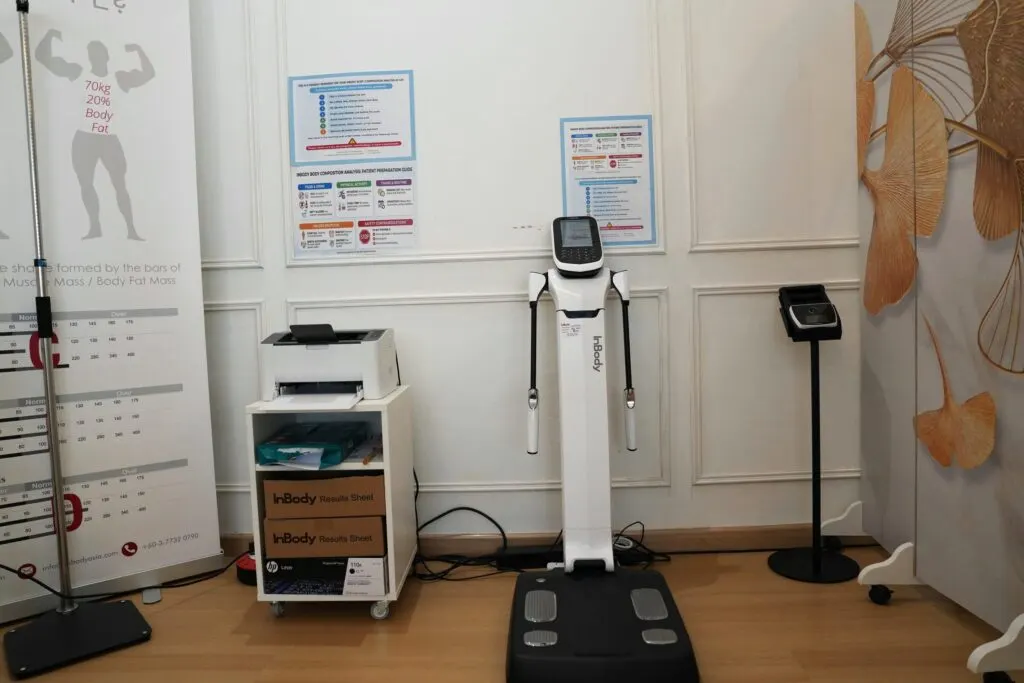
Without enough protein and resistance training, much of the weight you lose comes from muscle rather than fat. Lost muscle lowers your metabolic rate and makes regain easier once treatment stops. For that reason we repeat a body composition test throughout the programme instead of running it once at the start.
How we assess a case
We start every consultation with a full history rather than a prescription. A metabolic assessment shows whether insulin resistance already exists, and that changes the plan. For a quick first look, try our BMI calculator and waist to hip ratio, then read the weight and metabolic health pathway.
The Ministry of Health Malaysia publishes national obesity guidance. GLP-1 therapy is a prescription medicine, and a doctor decides eligibility after consultation. Book a consultation if you want your numbers checked first.
What to prepare before your consultation
A first consultation moves faster when you already hold the basic information. Most people arrive without records and then try to recall dates and numbers from memory, yet those details decide which tests are worth ordering. Prepare the following before your session starts.
- A list of your current medication and supplements, with daily doses
- Previous blood test results, even if they date back several years
- Your highest and lowest weight over the past five years
- Diets or programmes you have tried, and what happened afterwards
- Your usual sleep pattern, including the times you sleep and wake
Your doctor uses this information to pick tests that genuinely change a treatment decision. Without those records, much of the first session goes into rebuilding facts you already had.
What repeated dieting does to the body
Most people who come to the clinic are not people who have never tried. They have tried many times. The problem is that every cycle down and back up leaves a mark.
Rapid loss without enough protein takes muscle along with fat. When the weight comes back, more of what returns is fat than the muscle that was lost. Resting metabolic rate falls slightly with each cycle, and the body’s defence against losing weight gets stronger.
That means the fifth attempt is objectively harder than the first, even when the effort poured in is the same or greater. That is not a perception. That is physiology.
The four most overlooked factors
Sleep
Short sleep changes hunger and fullness hormones within days. Someone chronically sleeping five hours fights a higher appetite every day than someone sleeping seven. See the brain, sleep and stress.
Prolonged stress
Persistently high cortisol encourages fat to gather around the middle and raises cravings for high sugar food. Read cortisol symptoms.
Current medication that causes weight gain
Several commonly used categories of medicine list weight gain as a side effect. This is usually missed because patients do not connect the two. Bring the full list of your medicines to your consultation.
Undiagnosed conditions
An underactive thyroid, insulin resistance and PCOS can all hold progress back. They only show up in blood tests. Read PCOS symptoms and GLP-1 for PCOS and insulin resistance.
Stigma delays treatment
Many people put off seeking medical help for years because they were told this is a matter of discipline. Over that period, blood pressure, fasting glucose and lipid markers keep moving.
Treatment that starts earlier is easier, because there is less to reverse. Treating obesity as a personal failing is not only inaccurate, it also keeps people from being treated.
What changes besides the number on the scale
- Blood pressure and resting heart rate
- Fasting glucose and HbA1c
- Lipid profile
- Liver fat markers
- Load on the knee and hip joints
- Sleep quality and daily energy
Medically, these markers matter more than the figure on the scale. Someone can lose only a little weight and still get a large improvement in metabolic markers, and that counts as success. See the metabolic assessment and the advanced lipid panel.
Why we do not promise numbers
Response differs between individuals, and anyone promising a specific number of kilograms in a specific period is talking about their marketing rather than about medicine.
What we can promise is the process. Assessment before any prescription, numbers reviewed at fixed intervals, and a plan adjusted when the results show it needs adjusting.
For the full picture of the doctor-led programme and where GLP-1 therapy fits, see doctor-led GLP-1 and weight management.
Related: GLP-1 therapy or bariatric surgery and GLP-1 therapy and muscle loss.
Every iLIV guide is written and reviewed under our editorial standards, and each one carries the name of the reviewing doctor together with their MMC registration number.
Frequently Asked
Do I need to take this for life?
Not necessarily. Some people stop once their set point drops and their habits hold. Others stay on a low dose. Your doctor decides that with you from your numbers rather than from a fixed schedule.
If I have discipline, why do I need medication?
Discipline works against rising hunger hormones and a falling metabolic rate. Medication lowers that biological pressure, so your discipline operates on fair terms.
Related tests
Which tests are needed is decided at the consultation, not before.
Treatments on the same pathway
Not all of these suit everyone. The doctor assesses first.

Start with one conversation
An initial consultation to understand your situation before any testing is recommended.
Damansara Perdana · I-City, Shah Alam · +60 14-801 6493